

[it is] hard to be satisfied with a single way of seeing… The preceding merely defines a way of thinking. But the point is to live.
- Albert Camus
Every person carries a story about who they are. Most of us didn’t write the early drafts; those were written for us, by families, teachers, systems, cultures, and times. Each told us their ideas about what we were, what we are, what we ought to be, what we cannot hope to be. And while this can’t be entirely avoided, and it can help us construct a life, it can also hurt. We get anxious, or depressed, or confused, or maybe just disenfranchised and burned out. We may get stuck, wondering if we’re failing the story, rather than reflecting on the possibility that the story is failing us.
Therapy is the difficult work of figuring out which parts of the story are actually yours, which parts were handed to you, which parts are meaningful, and learning to tell your story in your own words, without censoring your needs for the audience of the world.

The goals are simple, but not easy: less distress, fewer symptoms, room to breathe and move and show up meaningfully — in relationships, in your labor, in the world, and, crucially, for yourself. Insight, yes, but also relief; understanding, but also the tools to choose what to do with what you discover.
That work looks different depending on who’s doing it. For people who’ve spent their lives being misread by institutions — late-diagnosed autistic and ADHD adults, queer and trans folx, racialized and marginalized communities — being told to “just go to therapy” carries its own degree of justified skepticism. For us, the mental health system has not always been a neutral party. That context doesn’t disappear when you walk into a session. It comes with you, and it belongs in the room.
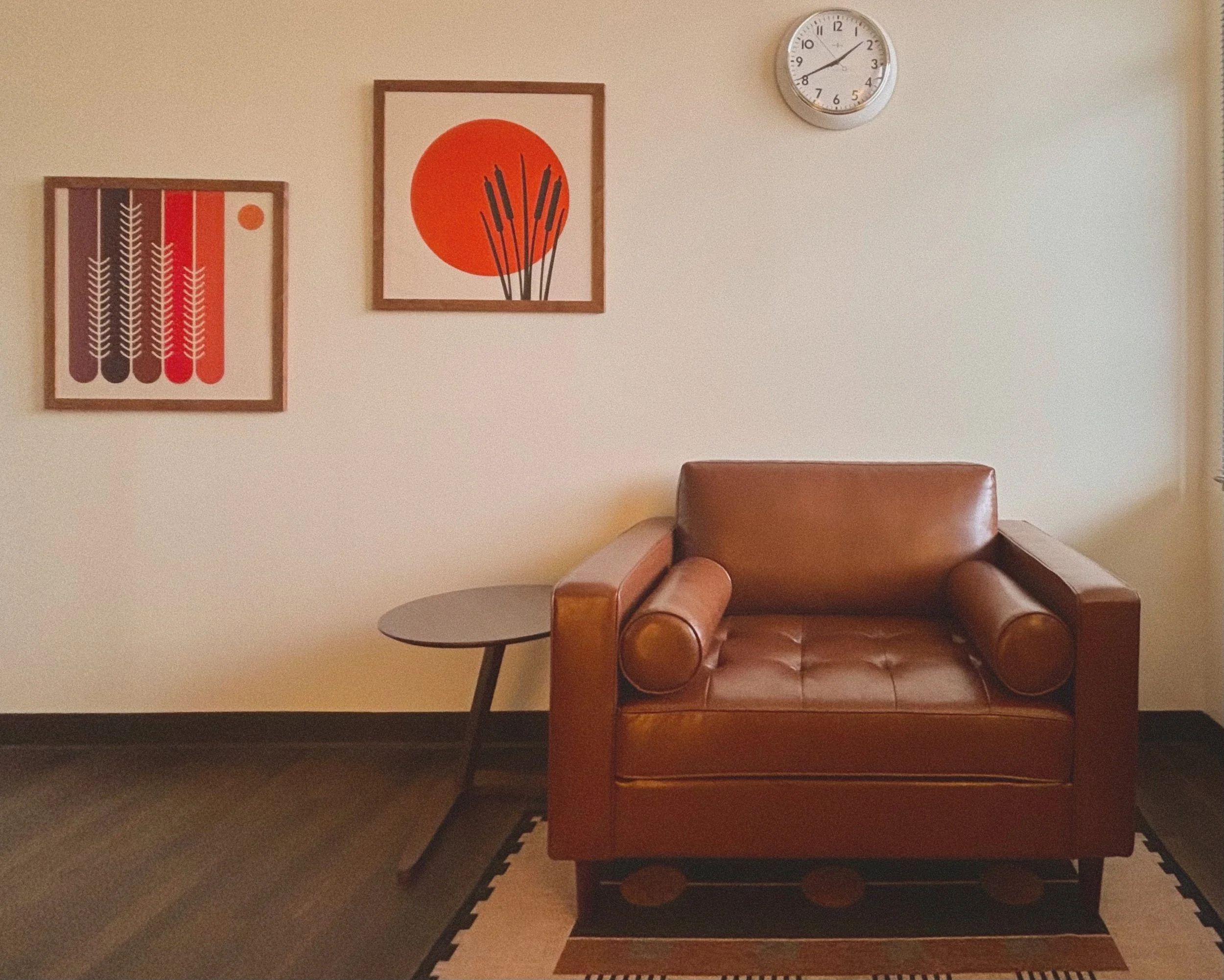
This is a small practice. A therapist, a deliberately curated therapeutic space, and an approach that takes seriously both your rich interior life and the systems that shape it. It’s a simple idea: you’re worth knowing, worth hearing, worth being curious about.
Sessions are collaborative, not in the sense that you’re handed worksheets and asked how it went, but in the sense that we set the direction together. Therapists don’t empower people, that’s not the role. Empowerment means giving someone power, and you can’t be given what’s already yours. Therapists don’t descend from the mountains to dispense wisdom. Therapists went to grad school. Got licenses and certifications. Facilitation — that’s the role. To help you find the best path to reclaiming your own power.
Maybe you set it down somewhere. Maybe you didn’t know it was yours. Maybe it’s felt unsafe to claim it. Whatever and wherever it is, that’s yours.
When you’re ready, we’re here.